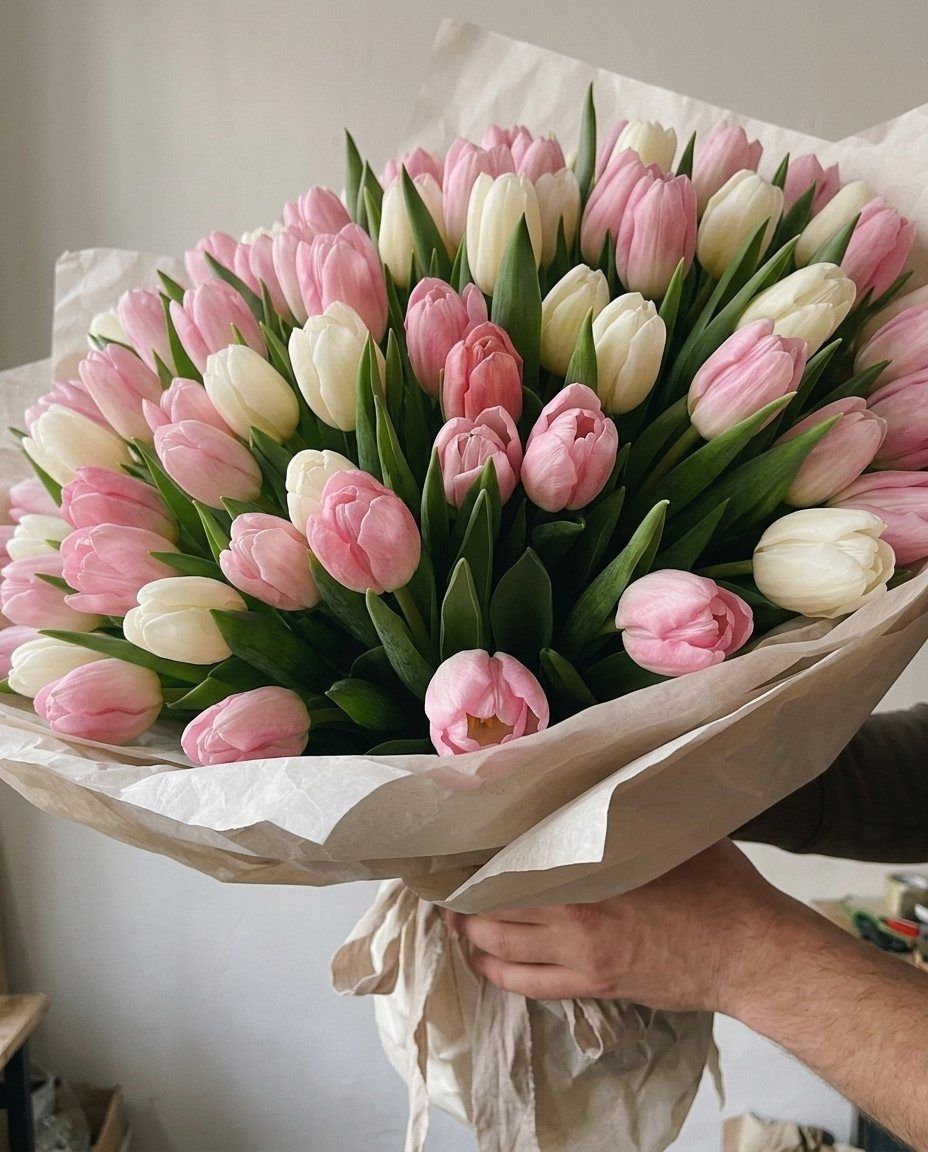
Tulips drooping in the vase: why it happens and what to do
Cut tulips keep growing and turn towards the light, so some bending is normal. If they are limp, recut the stems, change the water and wrap them in newspaper while they drink for at least two hours; a vase that holds the stems up helps too.
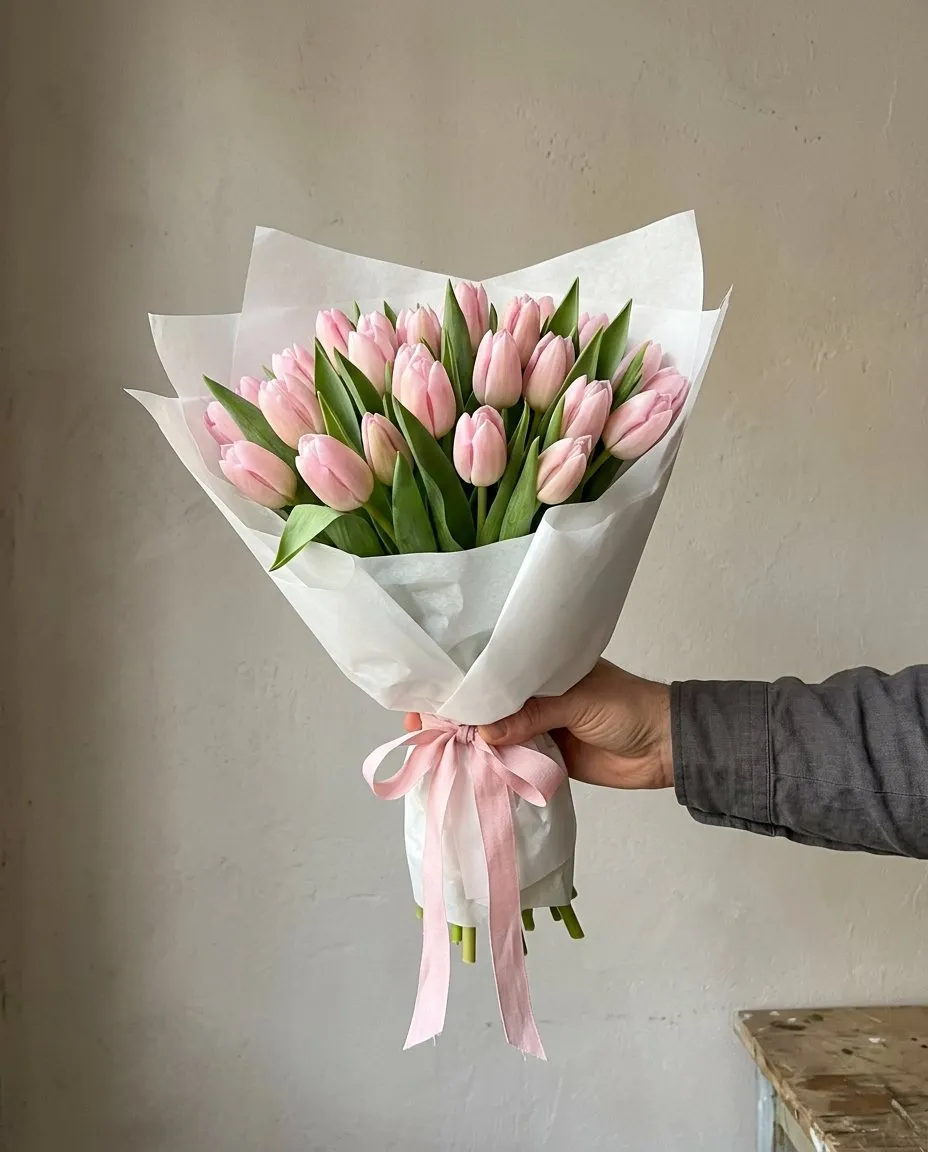
A gentle curve does not mean the bouquet is spoiled
Look at the stem before you try to straighten it. A firm tulip that forms an arc and carries a healthy flower may simply be moving as tulips do. A soft one that flops and cannot hold itself up needs its hydration checked. A snapped stem calls for a different decision: do not force it straight.
In the shop, when we arrange tulips, we leave room for their outline to change. These flowers go on growing after they are cut; University of Maryland Extension documents the way the stem lengthens in the vase.
They also turn towards the light. That response, called phototropism, is described for tulips in Mississippi State University’s handbook on handling cut flowers.
So if the bouquet is well watered and simply leaning towards a window, there is no need to treat it as an emergency. First check how the stems feel and how much support the vase gives.
If they are limp, start with these steps
Going without water during transport can leave tulips floppy. Recutting them and getting them into water promptly gives them a chance to firm up again.
Clear a surface and work with the bouquet lying down, holding it without squeezing the flowers:
- Take the tulips out and empty the vase.
- Wash the vase and rinse it before adding clean water.
- Remove the leaves that would end up under water.
- Recut the stem ends with clean, sharp scissors.
- Put them straight into cool water and give them support while they drink.
Cleaning the vase, removing submerged leaves and trimming are Purdue’s general recommendations for cut flowers.
Decide how much to cut according to the state of the base and the vase you have. For tulips, Bloom & Wild suggests a first trim of 3–5 cm and further trims of about 1 cm each time you change the water.
If they arrived long and you now need a different vase, leave yourself some margin before cutting. Do not shorten the whole bouquet just to make it fit the first glass you find.
Newspaper gives support while they take up water
The Royal Horticultural Society recommends wrapping the flowers in newspaper and leaving them in water for at least two hours, ideally overnight, to correct bent stems such as those of tulips.
It takes very little material, but do it carefully:
- Spread out a large sheet of newspaper and lay the bouquet on it with the stems aligned, without twisting them.
- Form a paper sleeve that holds them up; leave the bases free so they can go into the water.
- Fasten the paper to itself, avoiding tight rubber bands against the stems.
- Stand the bouquet upright in a stable container of clean water.
- Leave it to rest somewhere cool, then slide the sleeve off slowly.
The paper acts as a support. Maryland warns that bent tulips need to be held up while they rehydrate; otherwise they can keep the curve even once they are full of water again.
Do not pull on a flower to bring it level with the others, and do not try to correct a sharp bend in one go. If the bouquet is large, you can work in small groups and bring them together afterwards. That way you can line up the bases without having to hold every head at once.
A short vase can leave too much of the stem unsupported
A very wide mouth and low sides give long tulips little support. Mr Fothergill’s recommends using a vase that supports the stems to help them stay upright.
Try it before you cut: hold the bouquet inside the vase and let go little by little. If all the flowers fall outwards from the rim, consider a taller vase or a shorter arrangement.
You do not need to buy a special vase. Look for a stable container that is tall enough, with a mouth that does not squeeze the leaves. Once you have chosen it, adjust the length of the bouquet so that it is supported without hiding the flowers.
If you like a low arrangement, you can make one with shorter stems. It depends on the look you are after: keeping the full length or having something compact on the table. Put the odd short stem in a small container of its own if that helps you spread the bouquet out.
Use cool water and keep the stem ends submerged
For bulb flowers such as tulips, the guide from the North Country Master Gardener Volunteers recommends cold water. Use cool tap water; there is no need to turn the vase into an ice bath.
Check the level every day and make sure it reaches every stem end. If you use an opaque vase, lift the bouquet carefully to check. Do not take it for granted that there is enough water because you added some yesterday.
Change the water every few days and trim the bases again. Keep the tulips away from direct sun, radiators and fruit, as Bloom & Wild recommends.
If you have cut-flower food, use it as the label says; Purdue includes these products in its general care advice. Do not turn the rescue into an improvised cocktail of products. To organise the care of the rest of the bouquet, see our guide to making it last longer.
Light: let them move without the whole bouquet leaning one way
Choose a bright spot with indirect light. If all the stems are reaching for the same window, turn the vase from time to time; this tip comes from Bloom & Wild’s tulip guide.
Think about where you will be looking at the bouquet from. In the middle of a table, an arrangement that opens out in several directions can work well. If it stands against a wall, leave room so the flowers do not knock into it as they shift.
You do not have to chase every curve. Compare the firmness of the stems, how clean the water is and how the flowers look. A change in the bouquet’s shape by day three does not, in itself, mean you have neglected its care.
The pin: not needed to begin with
The advice to pierce the stem just below the flower is usually explained as a way to ‘release air’. We have not verified any trial that confirms that mechanism or its effectiveness for a bouquet at home. The RHS and Maryland conditioning guides cited here describe hydration and support for bent stems.
Our advice is to try those steps before piercing anything. A curved, firm tulip does not need treatment as a matter of course; a dehydrated one needs the base of its stem in water and a support that keeps it upright. If it still looks poor after its rest, check each stem separately and keep the ones in good condition.
If you are giving tulips
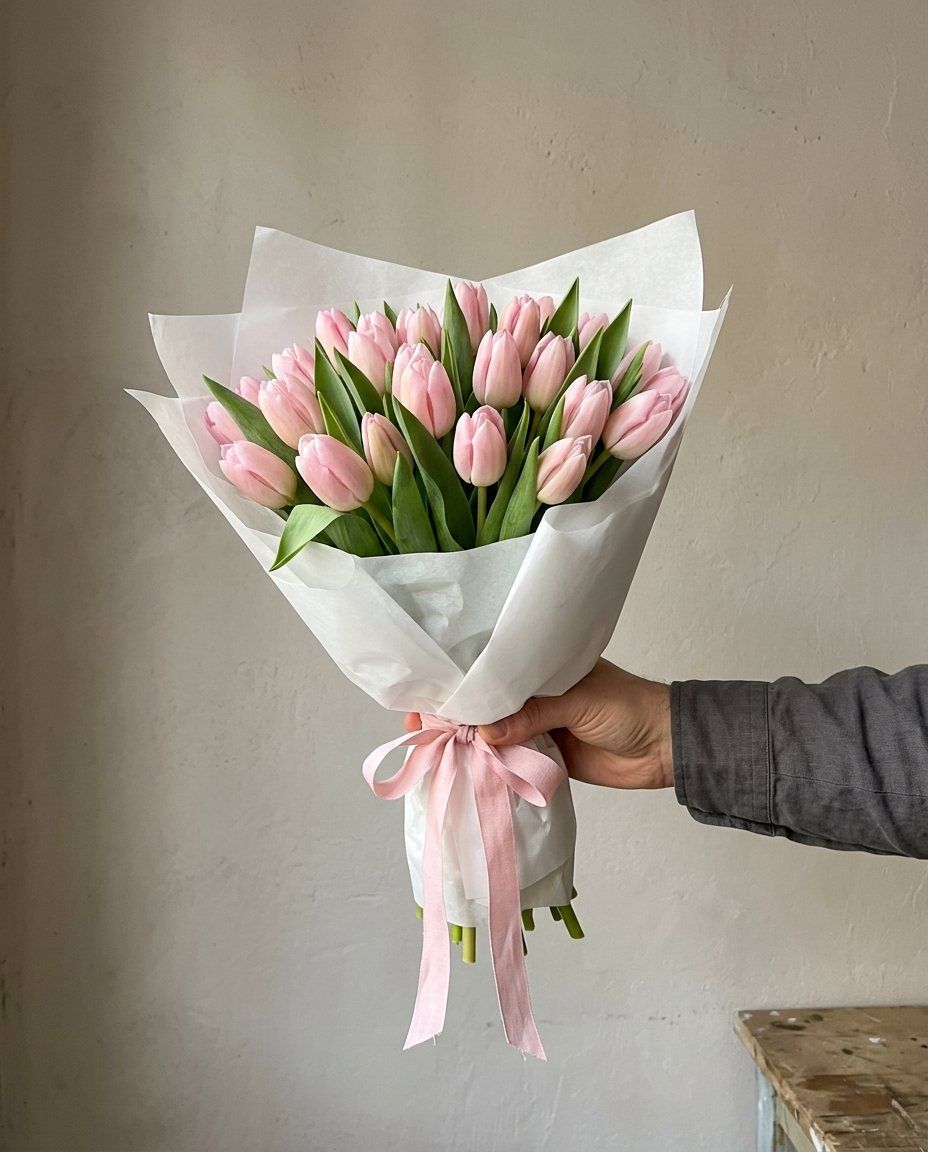
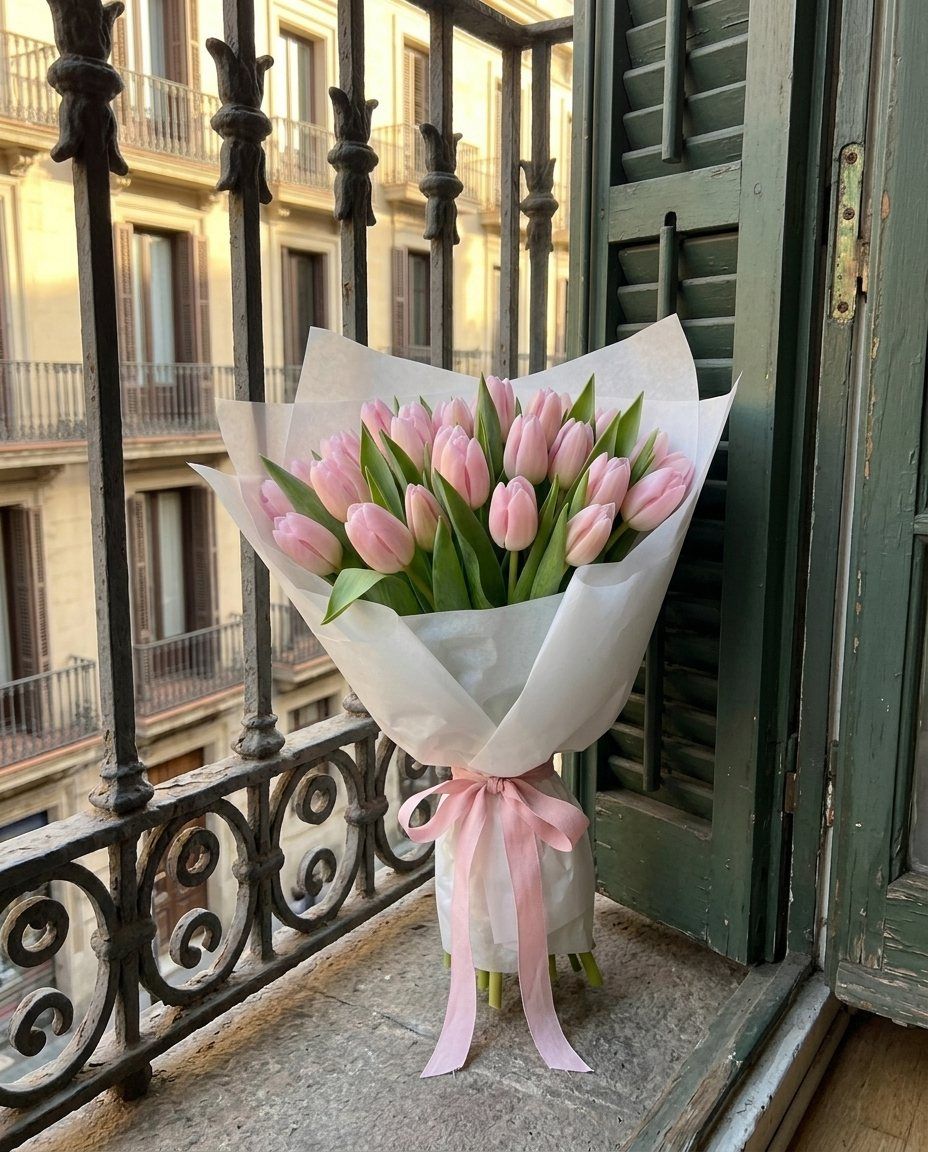
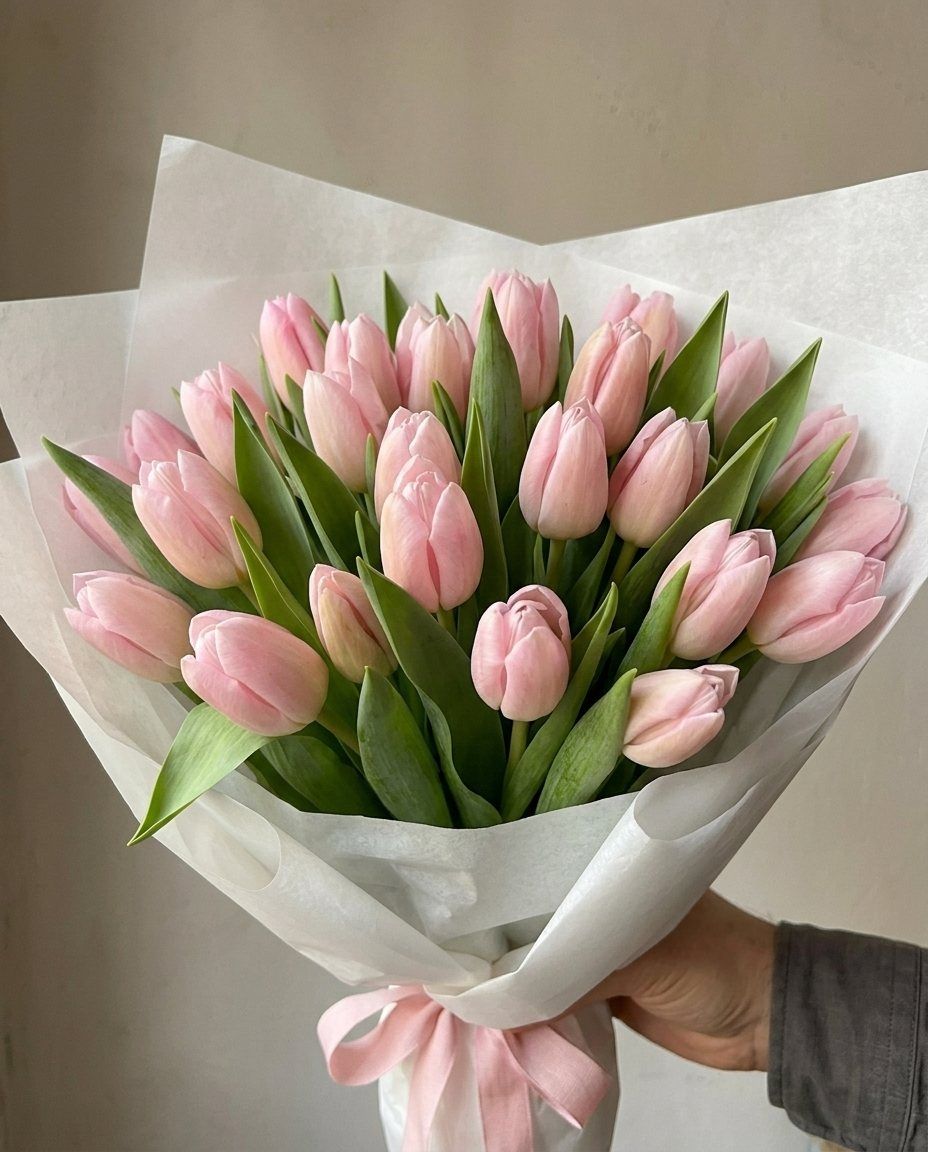
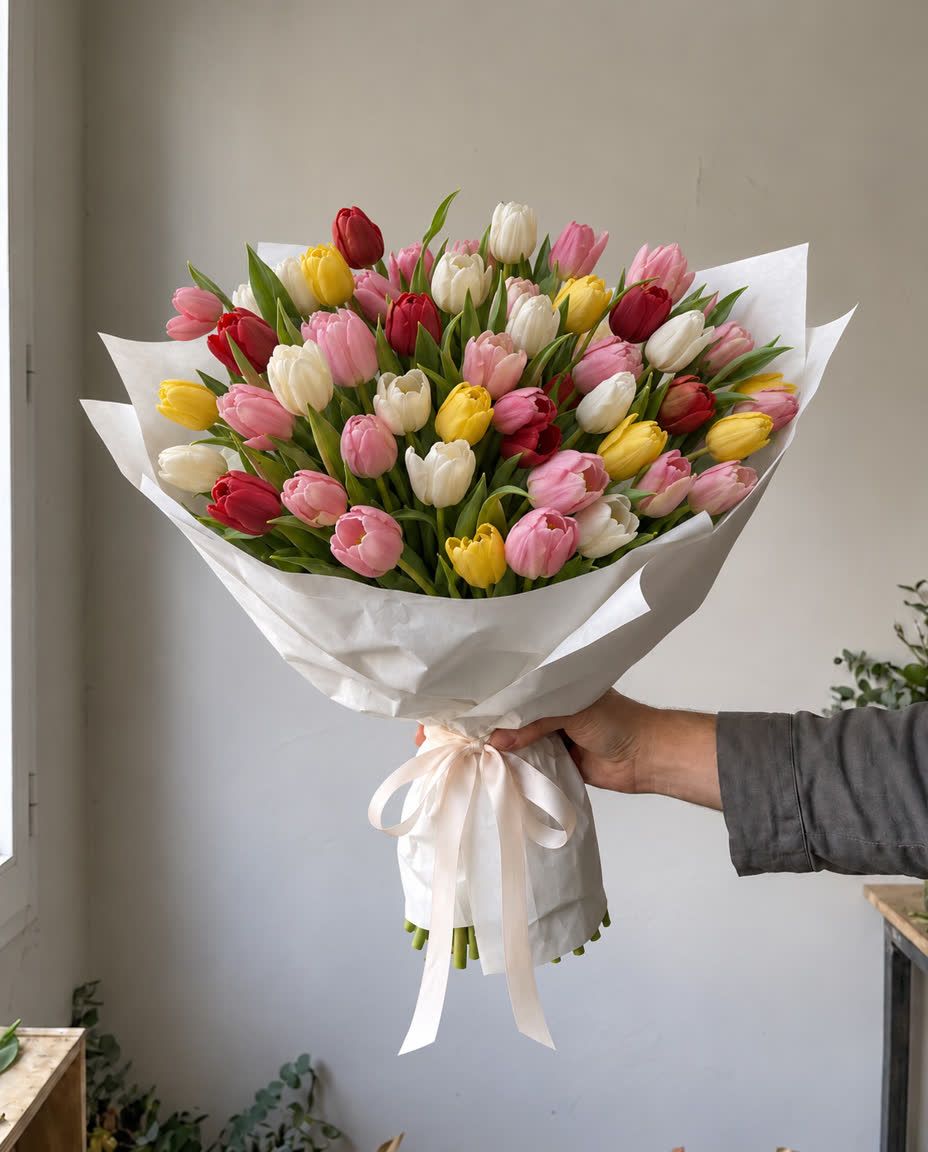
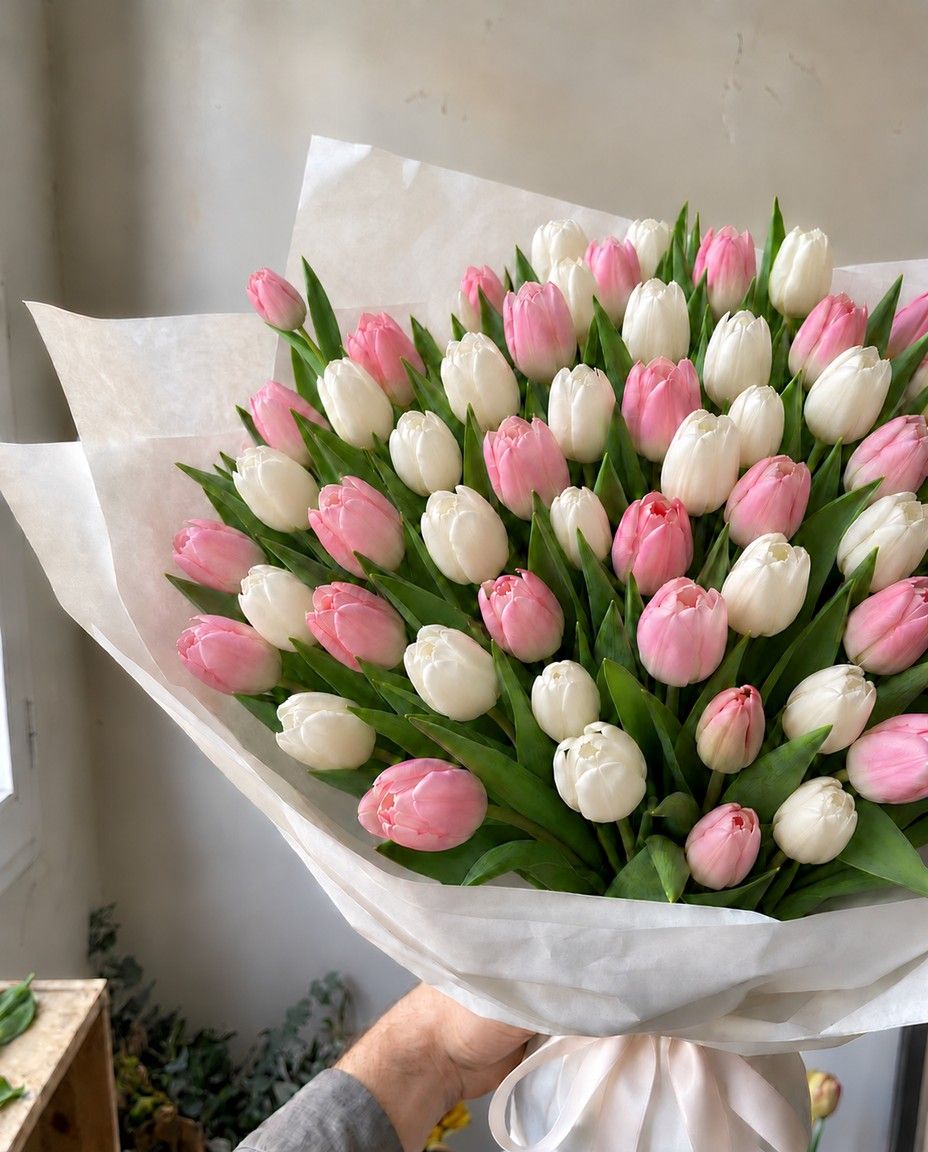
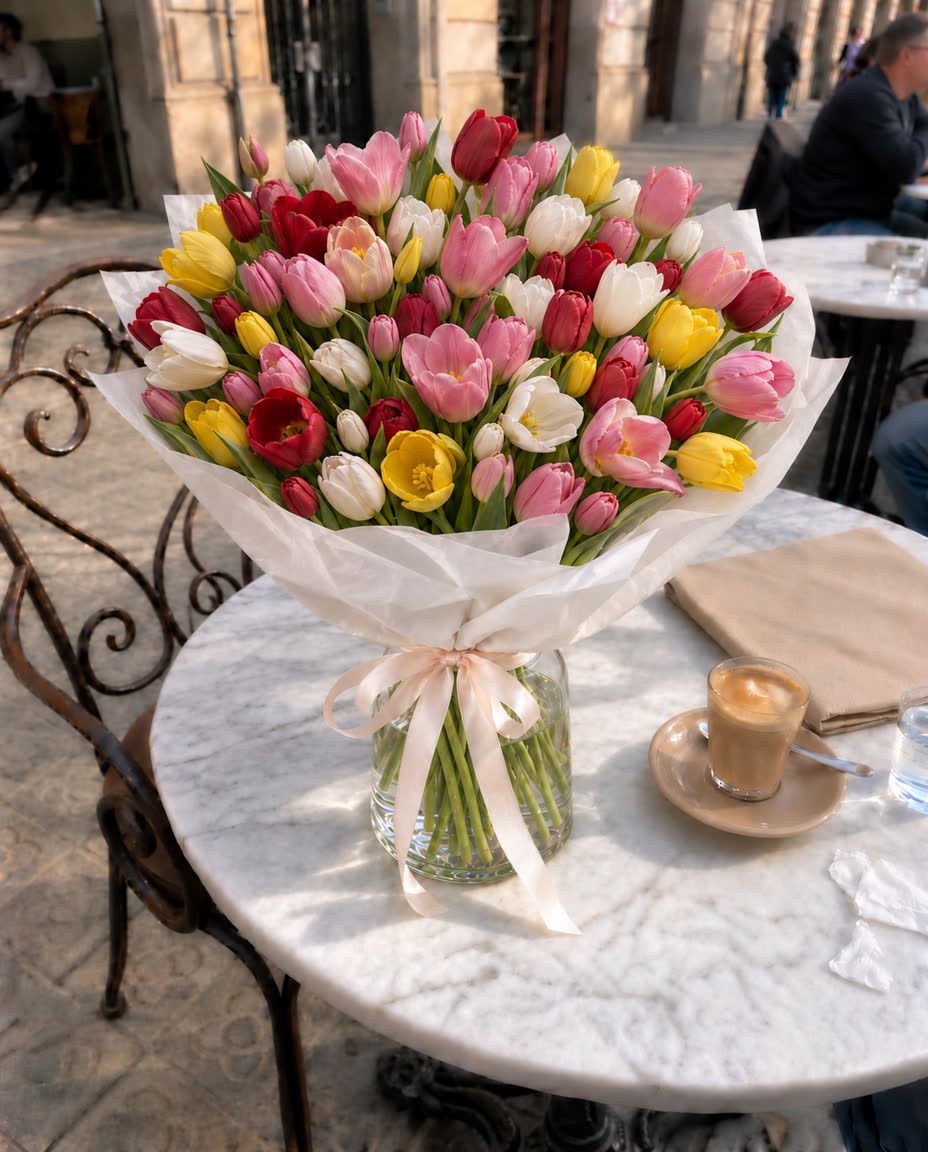
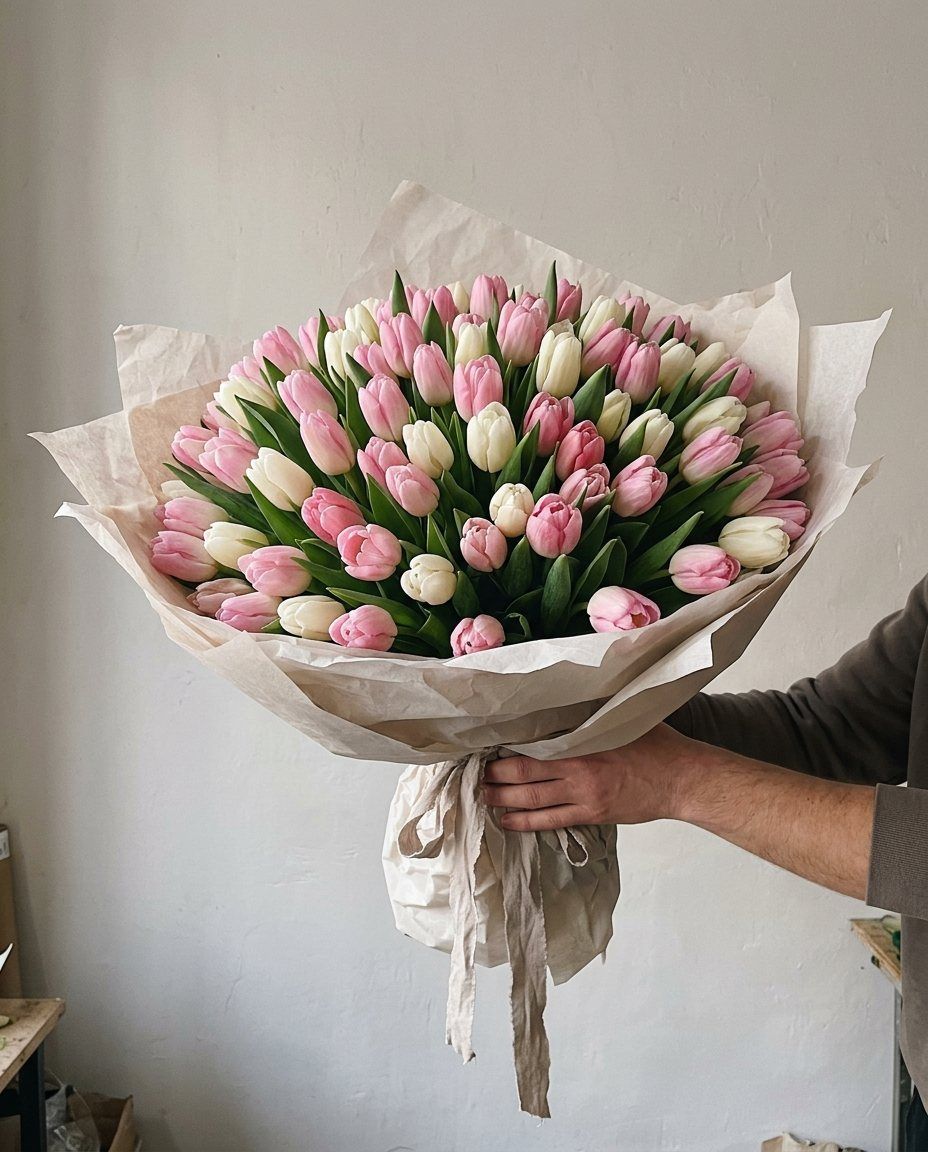
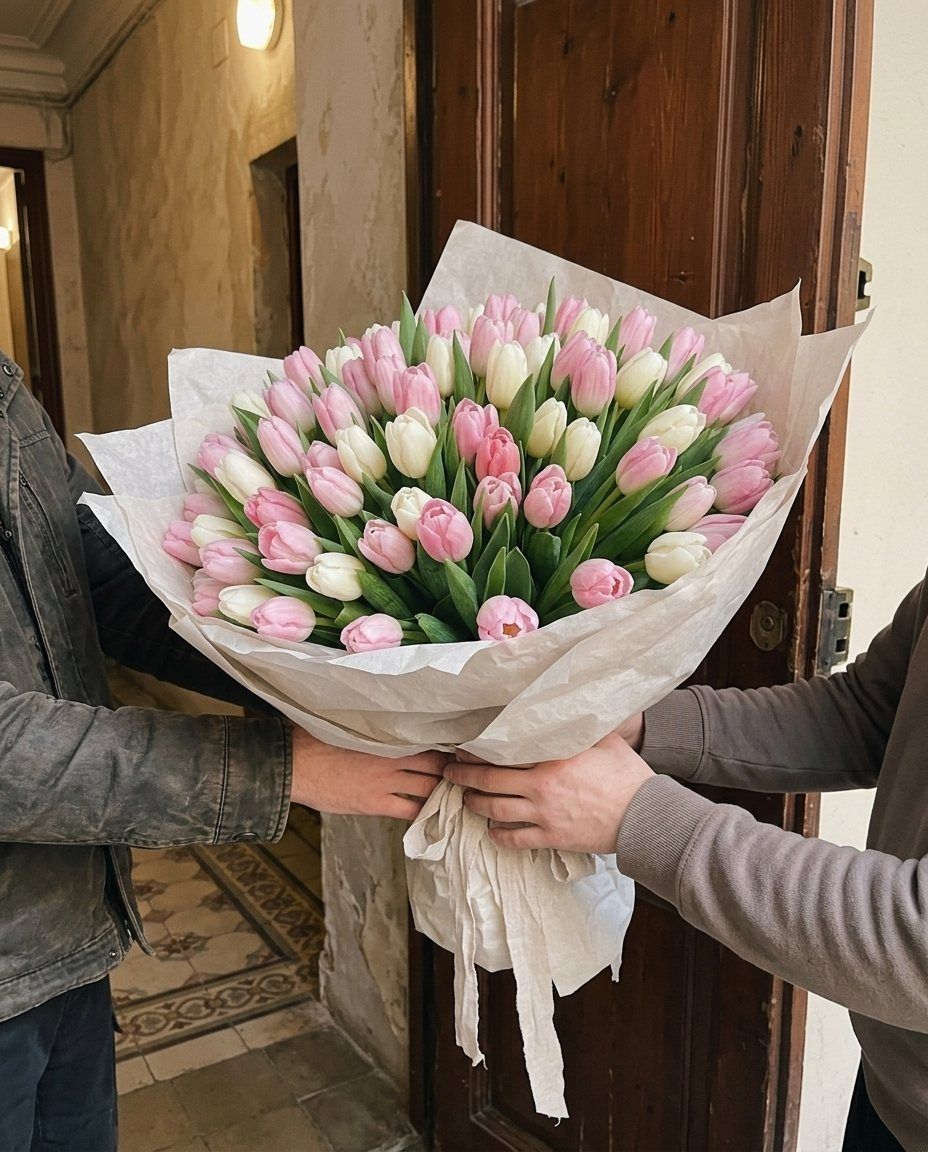
At Espafloria you can choose 25 tulips for 59 €, 51 tulips for 119 € or 101 tulips for 215 €. For a large bouquet, have a roomy, stable container ready or divide the flowers between several vases.
Collection from any of our three shops is free. For same-day delivery in Barcelona, order before the daily cut-off. Large bouquets are prepared for the following day; see the terms on the delivery page. Put a simple tip on the card: stand them in water as soon as they arrive and leave room for them to change shape.
Frequently asked questions
Why do tulips droop even when they have water?
They keep growing after they are cut and they respond to light. They can also bend from dehydration, or because a low vase leaves too much stem unsupported.
Do tulips keep growing in the vase?
Yes. University of Maryland Extension documents growth after cutting, which is why the height and shape of the bouquet can change.
How long should tulips stay wrapped in newspaper?
The RHS recommends at least two hours in water with the support of newspaper, ideally overnight. Take it off carefully afterwards.
Should I prick the stem with a pin?
We do not recommend it as a first resort: the conditioning guides we cite suggest trimming, water and support.
Do tulips want cold or warm water?
Use cool tap water. The advice for bulb flowers is cold water; you need neither ice nor boiling water.