Poinsettia care: how to keep it alive until Three Kings' Day (and beyond)
A poinsettia needs plenty of light, a steady temperature and watering when the surface of the compost starts to dry, with the excess left to drain away. Protect it from the cold on the way home and keep it away from radiators and draughts to reduce leaf drop.
If it is losing leaves, check the compost before you water
If your poinsettia starts losing leaves a few days after coming home, check how moist the compost is before watering it again. In the shop, when we are shown a drooping plant, the first things we look at are the compost and where the plant has been. The same symptoms can have different causes.
Too much water can turn the lower leaves yellow and make them fall; letting the compost dry out too far can also cause wilting and leaf loss.
Run through these checks before you change how you look after it:
- Lift the pot out of its decorative cover and see whether water is standing in it.
- Touch the surface of the compost: is it moist or starting to dry?
- Think back over the journey home and whether the plant stood by an open door.
- See whether a radiator or warm air is blowing towards it.
Note what you find and put that one thing right first. If you move it to another room, water it and repot it all on the same day, it will be harder tomorrow to know what it needed.
The cold on the way home counts too
The plant can suffer before it reaches the living room. The Royal Horticultural Society warns that temperatures below its recommended minimum of 13–16 °C can cause chill damage and make leaves and bracts fall. The damage may only show days after you buy it.
Ask for the top of the plant to be protected too, with a sleeve or wrapping. Go straight home and do not leave it waiting in a cold car. The wrapping protects it on the journey; take it off when you arrive so that you can look the plant over.
If you are buying other presents, leave this stop until last. Decide where the plant will go before you set out, so that it does not spend its first night in the hall while you look for a place.
Pick a plant with firm leaves and no obvious leaf drop. One that has already been badly chilled may keep deteriorating even with good care afterwards; that damage cannot always be reversed.
Plenty of light, no radiator, no draught
Stand it near a bright window, protected from strong direct sun, cold glass and draughts. A daytime temperature of roughly 16–21 °C matches the recommendation of University of Maryland Extension. Swings in temperature beside doors, windows and heating vents can encourage leaf drop.
It is not enough for the corner to look pretty. Watch what happens there on an ordinary day: whether you open that window to air the room, draw a curtain that leaves the plant against the glass or switch on a heater underneath it.
A table close to the window can be more practical than the windowsill. When you air the room, move the plant out of the draught for a while and then put it back. Avoid carrying it from room to room just to decorate the table at every meal.
How to water it without drowning it
Check the moisture every day, but water only when the surface begins to dry. Use water at room temperature, wet the compost and let the surplus run out through the holes in the pot. Water collecting in the saucer or inside a waterproof sleeve can damage the roots.
You can organise the watering like this:
- Take the pot to the sink, without its decorative cover.
- Pour the water slowly onto the compost and check that it drains.
- Let the pot drain before putting it back.
- Make sure the outer pot has been left empty.
There is no universal amount in millilitres and no ‘every Sunday’ rule. The size of the plant, the pot and the conditions in the room all change how much water it needs. University of Minnesota Extension recommends going by the compost and avoiding both drying out completely and standing water.
If several of you look after it at home, make it clear who has watered. A note with the date works better than two people adding water because each thinks the other has forgotten.
Is it poisonous to cats and dogs?
Yes: the ASPCA lists the poinsettia as toxic to dogs and cats. Its sap irritates the mouth and stomach and can cause vomiting, although the organisation itself says its toxicity is generally overrated.
Put it out of their reach and pick up fallen leaves. If your pet has chewed it, or you suspect it has eaten part of it, speak to your vet and give the name of the plant; the ASPCA recommends getting in touch as soon as possible after a possible toxic ingestion.
The milky sap can also irritate skin and eyes. Wear gloves when you prune and avoid touching your face while you work.
After Three Kings’ Day: keeping it and getting the red back
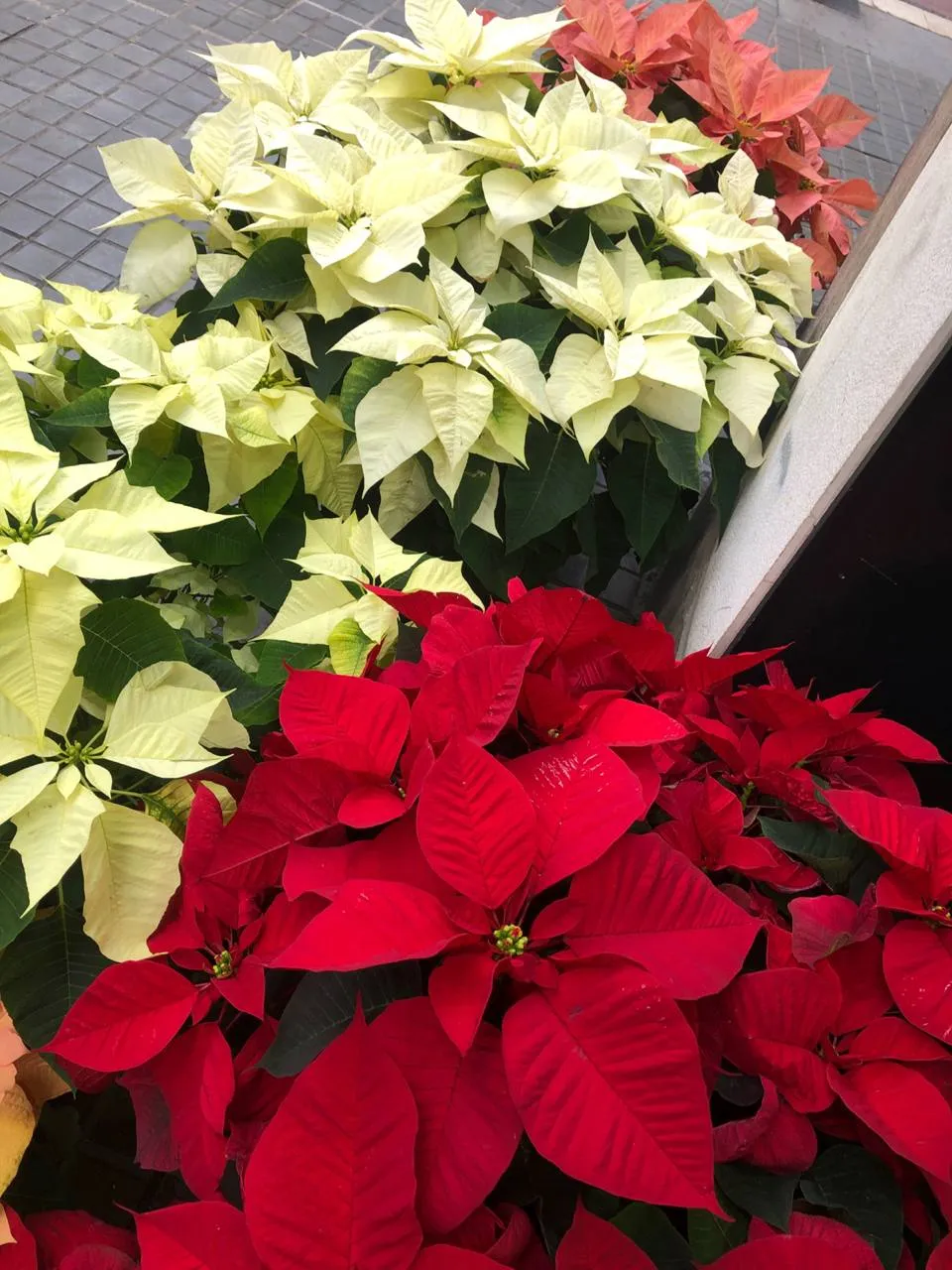
The red parts are bracts, modified leaves; the true flowers are the small structures in the centre. The end of the colourful season does not mean you have to throw away a plant that is still healthy.
It needs no feeding over the holidays. If you decide to keep it, start feeding when new growth appears, using a houseplant fertiliser at the rate recommended on the label.
In spring you can prune it to encourage a more compact shape, and refresh the compost. Maryland recommends doing this in early May and not pinching it out again after early September if you want colour for Christmas.
From late September, give it 14 hours of unbroken darkness every day, alternating with daylight. A room with no lights on at night or a lightproof box will do; even small amounts of stray light interfere with flowering. Keep this routine up for about 8–10 weeks: that is the guide the RHS gives for short-day treatment.
Set a daily reminder and be honest about which option you can really keep up. The result at home may differ from that of a professional greenhouse.
If you are looking for a plant to give
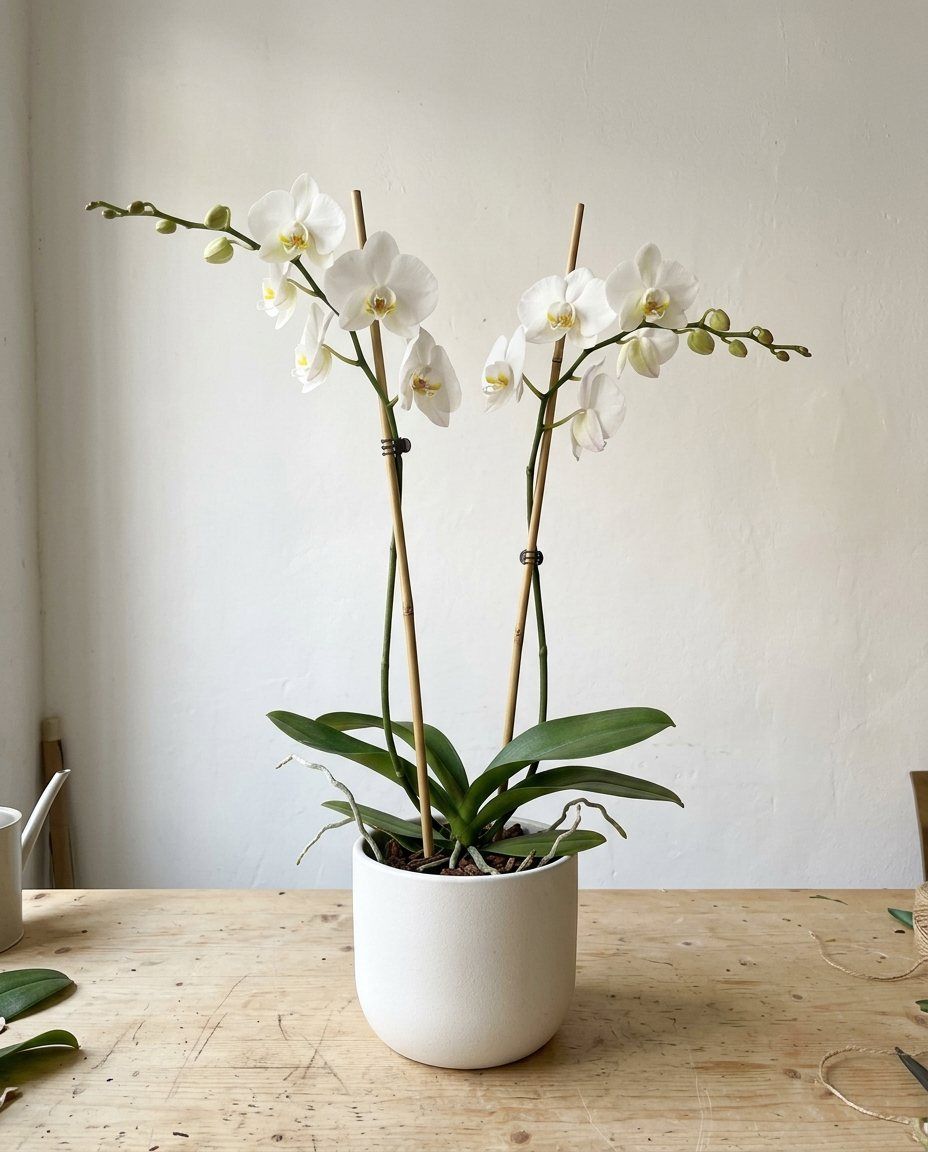
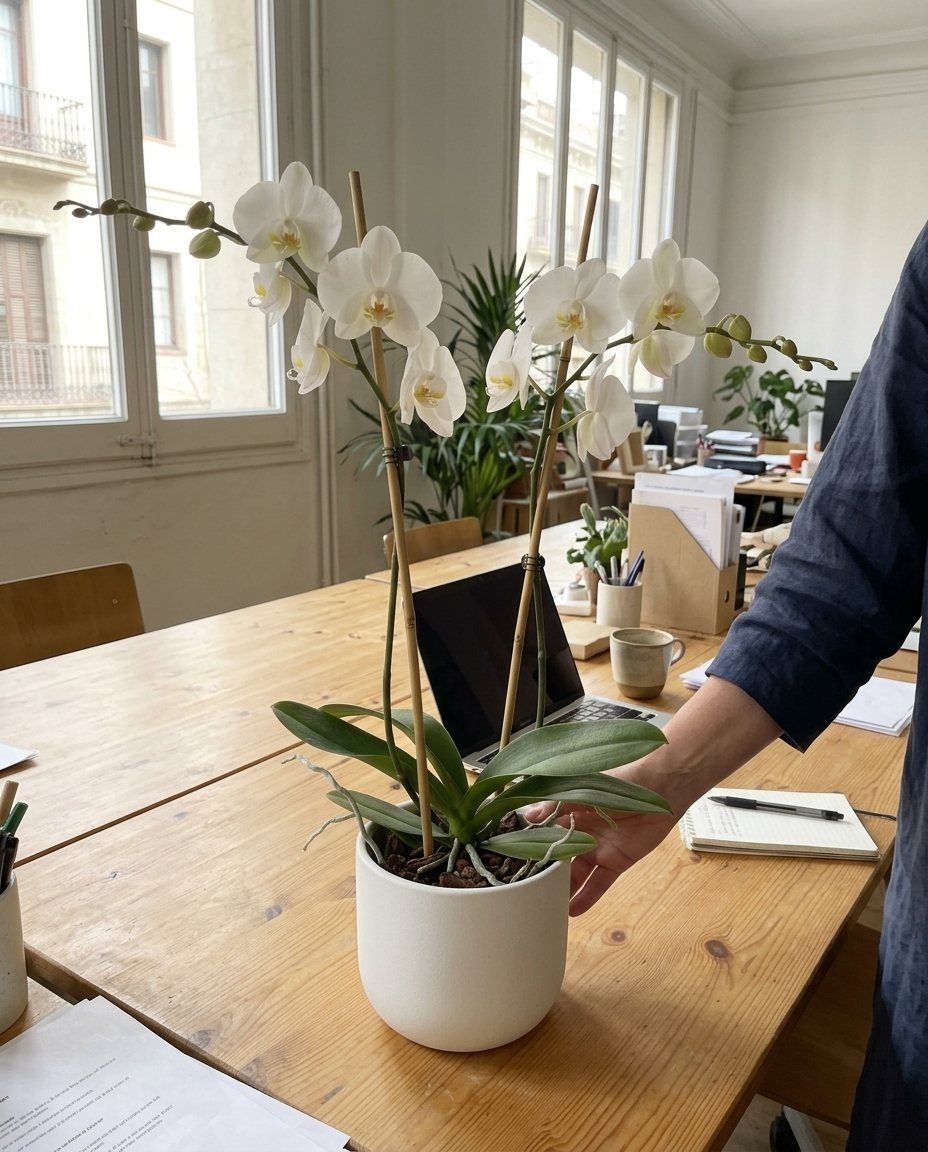
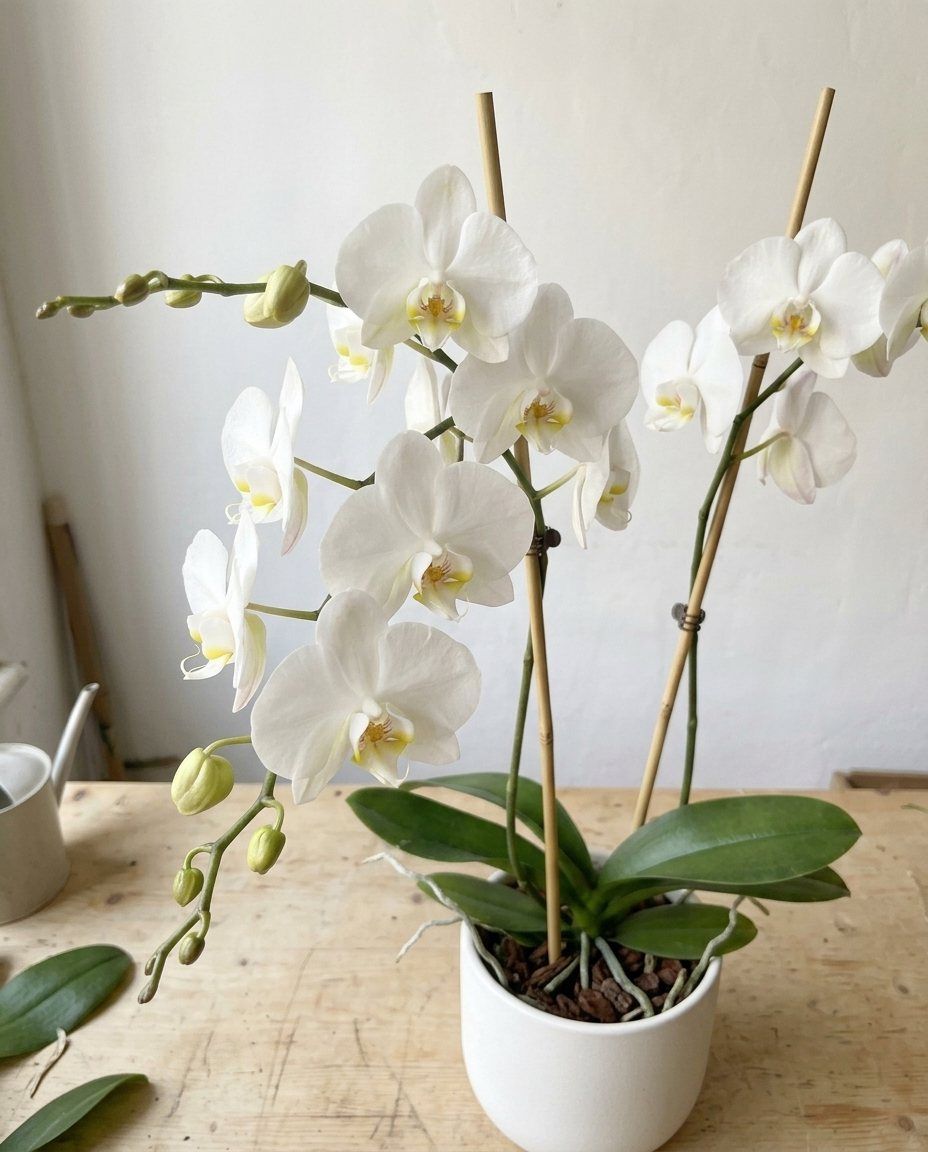
For poinsettias, ask in our shops when they are in season. If you would rather give another plant from the Espafloria catalogue, the white orchid with two flower spikes costs 45 €; you can read up on what it needs in how to care for an orchid.
Collection from any of our three shops is free. When choosing between a plant and a bouquet, think too about where the gift will live and who will be able to look after it.
Frequently asked questions
Why is my poinsettia losing its leaves after a week?
It may have been exposed to cold or draughts, or watered incorrectly. Check the moisture of the compost and where the plant is standing first; adding water without checking can make the problem worse.
How often should you water a poinsettia?
When the surface of the compost starts to dry. There is no fixed schedule: water, let it drain and empty the saucer.
Is a poinsettia poisonous to cats and dogs?
Yes. According to the ASPCA, its sap irritates the mouth and stomach and can cause vomiting, although its toxicity is generally overrated. If your pet has chewed it, speak to your vet.
Can I leave it on the balcony in winter?
It is better kept indoors, somewhere bright and sheltered. Cold and draughts can make it lose leaves and bracts.
How do I get a poinsettia to turn red again?
Keep the plant healthy through the year and, from late September, give it 14 hours of unbroken darkness every day for about 8–10 weeks, with light during the day.