How to care for a Phalaenopsis orchid and help it flower again
A Phalaenopsis needs plenty of light without strong sunlight, a pot that drains and watering when the growing medium is almost dry. To help it flower again, care for the roots first and check the light; after flowering, remove a dry spike or cut a green one above a node if the plant is healthy.
Start with the roots and the pot
An orchid losing its flowers does not mean it has died. Look at the leaves, roots and growing medium before changing its care. A plant with firm leaves and healthy roots can spend a period without flowers while continuing to grow.
In the shop, when someone asks how much to water it, we start by checking the pot. The decorative pot may hide water collecting around the inner pot. So the first useful step is to lift out the inner pot and look underneath.
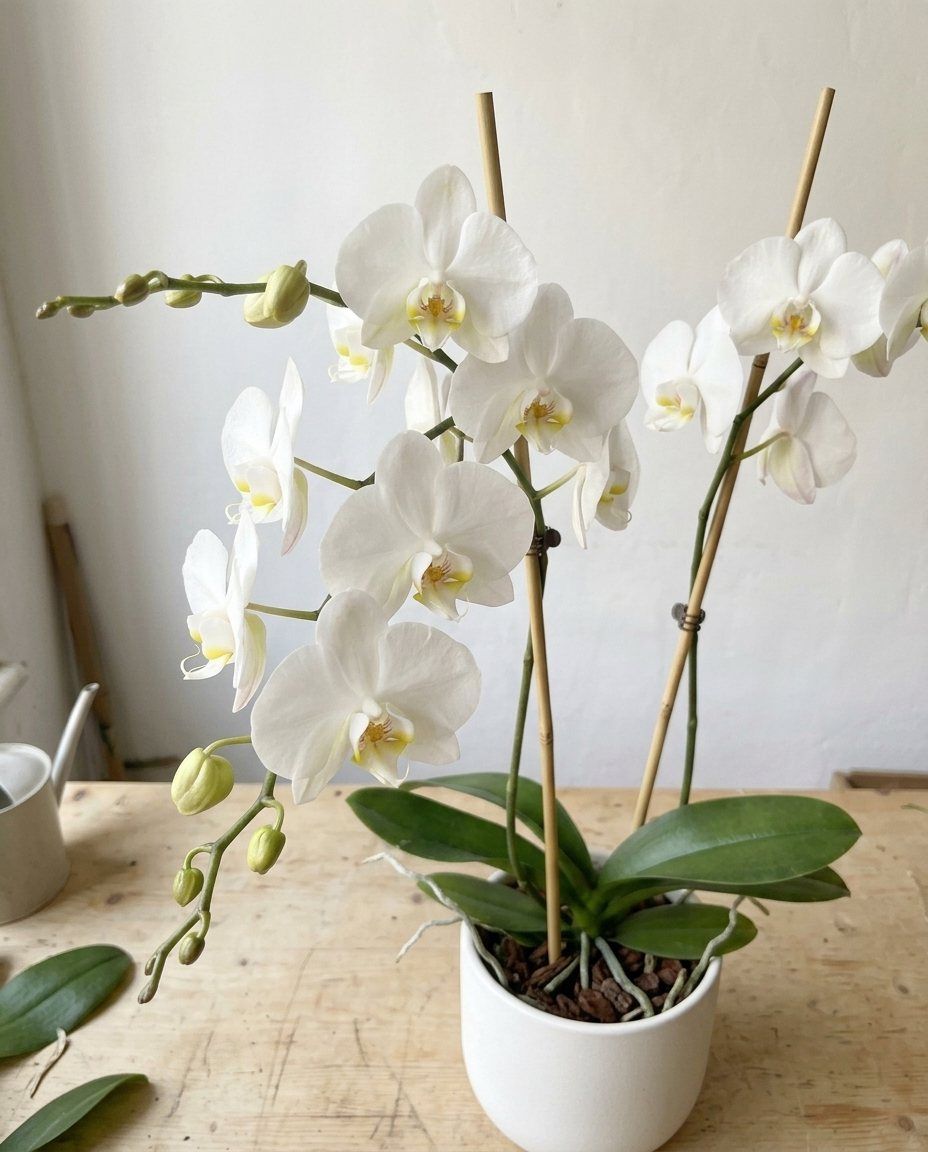
Phalaenopsis orchids develop aerial roots that may grow out of the pot; this is normal and healthy roots should not be cut off. Do not try to hide them all or force them into the growing medium to make the plant look tidier.
Check these three things:
- The inner pot has holes for water to drain through.
- The growing medium has gaps between its pieces rather than forming a compact mass.
- The roots feel firm, rather than soft, hollow or disintegrating.
Black, soft roots may indicate damage from excess water; dry, brittle roots may indicate a lack of hydration. Firmness helps you judge their condition better than colour alone.
How to water it without drowning it
Water thoroughly and wait until the growing medium is almost dry before watering again. Frequency changes with the heat, pot and surroundings, and you should not leave water pooled in the centre of the leaves.
At home, you can follow a simple routine:
- Lift the inner pot out of the decorative pot.
- Check how damp the bark is and lift the pot: does it still feel quite heavy?
- If it needs water, pour lukewarm water over the growing medium, letting it run through the holes.
- Wait until it has finished draining and empty any water left in the outer pot.
- If you wet the centre of the leaves, carefully dry any trapped water.
Exposed roots usually change from silvery to green when hydrated. Use that clue alongside moisture and weight; a root receiving little air or light may look different.
Use a weekly check as a reminder, but decide whether to water after looking at the plant. If the bark is still damp, wait. If conditions have changed, check sooner: a fixed schedule does not reflect what is happening inside the pot.
Where to put it in a Barcelona flat
Find a bright window with gentle light. An east-facing window can work well; at a south- or west-facing window, filter strong sunlight with a sheer curtain. A Phalaenopsis needs light, but too much sun can scorch its leaves.
In a flat facing an internal courtyard, distance from the window matters. A shelf that seems bright to you may receive much less light than the windowsill. Try a spot near the glass and observe how the sunlight falls during the day.
If the window gets strong afternoon sun, start with the sheer curtain drawn. If a building opposite shades it, avoid putting the plant at the back of the room.
Let it adjust to changes in light gradually. Moving it from a dark corner into direct sunlight increases the risk of scorching. You can photograph its location and leaves to compare, rather than moving it every few days.
Yellow leaves: what to check before watering more
A lower leaf that slowly turns yellow may be reaching the end of its life. If many leaves turn yellow, roots deteriorate or dark patches appear, you need to check for other causes; broken-down growing medium and root loss can also cause yellowing.
Work through these checks:
- Just one lower leaf, with the rest firm: watch how it develops without pulling it off straight away.
- Several affected leaves and a heavy pot: check for trapped water and inspect the roots.
- Damage on the side facing the window: check how many hours of direct sun it receives.
- Spreading patches or soft tissue: ask for help with photos of the leaves, roots and growing medium.
Limp leaves can result from too little water or from overwatering that has damaged the roots. Adding more water without checking them can make the problem worse. Fertiliser does not automatically fix a yellow leaf either.
Where to cut the flower spike after flowering
Wait until flowering has finished and distinguish the flower spike from the roots. Nodes are the small bumps along the spike. Use a sharp tool, sterilised before cutting each plant, and move the leaves aside so you can see where you will cut.
- Completely brown, dry spike: cut it near the base, leaving enough space to avoid damaging leaves or roots.
- Green spike and a strong plant: you can cut just above an unused node, usually the second from the base, below the dry section.
- Weakened plant: it is best to prioritise recovery and remove the spike near the base.
A Phalaenopsis can produce a flowering side shoot from an existing spike, but that second flowering may be smaller and put a strain on the plant. Keeping the green spike or removing it to give the plant a rest are both options; neither guarantees flowers straight away.
Why it is not flowering again
If leaves and roots are growing but no new spike appears, check the light first. Insufficient light is a common reason for a lack of flowers. Then check drainage and avoid trying to get results by adding more fertiliser.
If the plant is strong, a slightly cooler spot may also help: the RHS suggests reducing the temperature by around 5 °C for approximately a month to encourage a new spike. Do this indoors, staying within the night-time range given below and avoiding draughts or sudden chilling.
For ongoing care, use a suitable orchid fertiliser according to its label. For home conditions, the University of Maryland suggests feeding during active growth every three or four waterings. Always adapt that guidance to the product, the plant’s condition and how often you actually water.
Too much fertiliser can damage the roots. If the plant is recovering, look for new roots and firm leaves first. Expect a process lasting months, without setting a flowering date.
Winter heating and when to change the growing medium
Keep the plant away from radiators and draughts. As a guide, Phalaenopsis orchids prefer warm conditions, with around 19–30 °C during the day and 16–19 °C at night. You do not need to aim for the upper end: check the temperature beside the pot.
In winter, keep the leaves away from the glass if it gets very cold, and avoid direct airflow from heating. Check again how the growing medium dries after turning the heating on. A location that worked in September may need adjusting.
If the bark has broken down, takes a long time to dry or the roots are damaged, consider replacing the growing medium. Use an airy, bark-based orchid mix and remove only dead or damaged roots. Choose a pot that fits the roots without leaving an excessive amount of growing medium around them.
If you choose an orchid from Espafloria
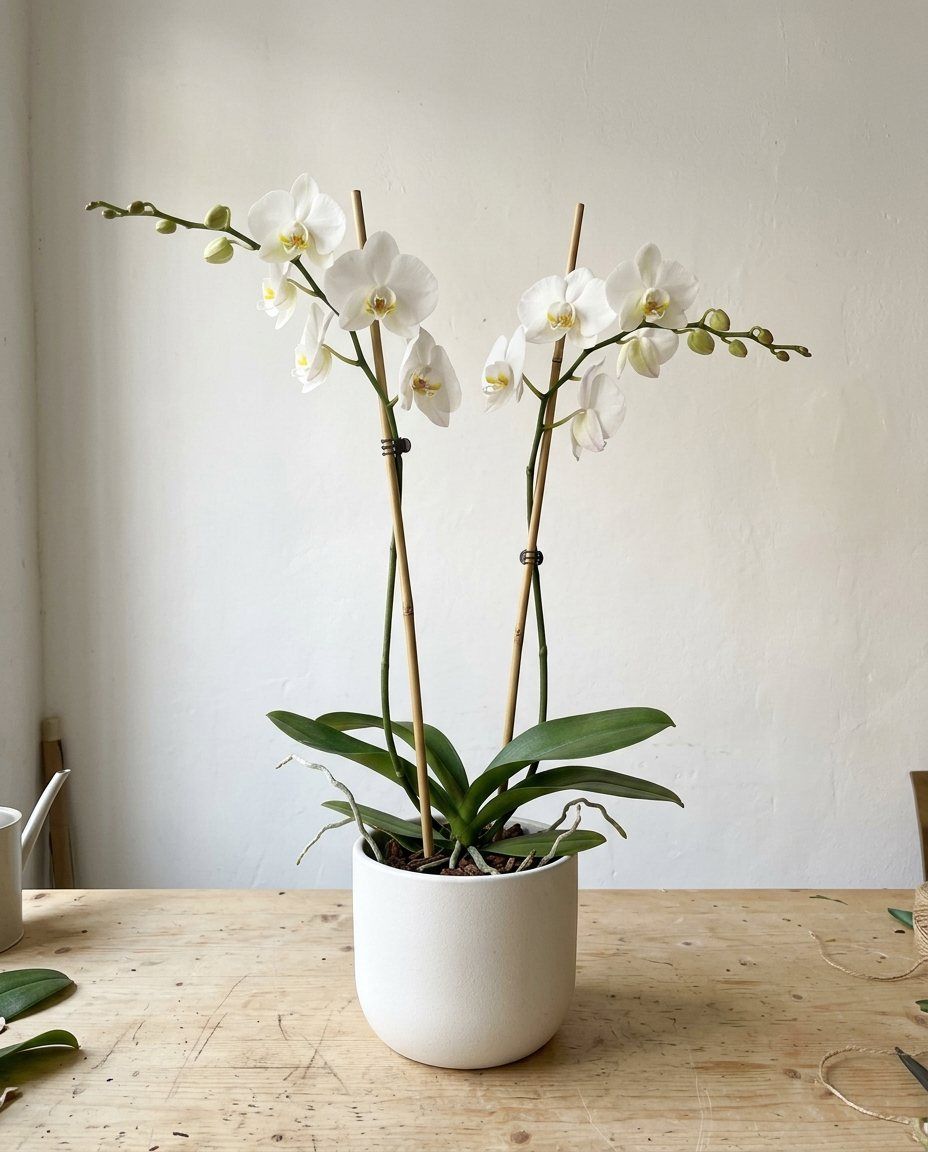
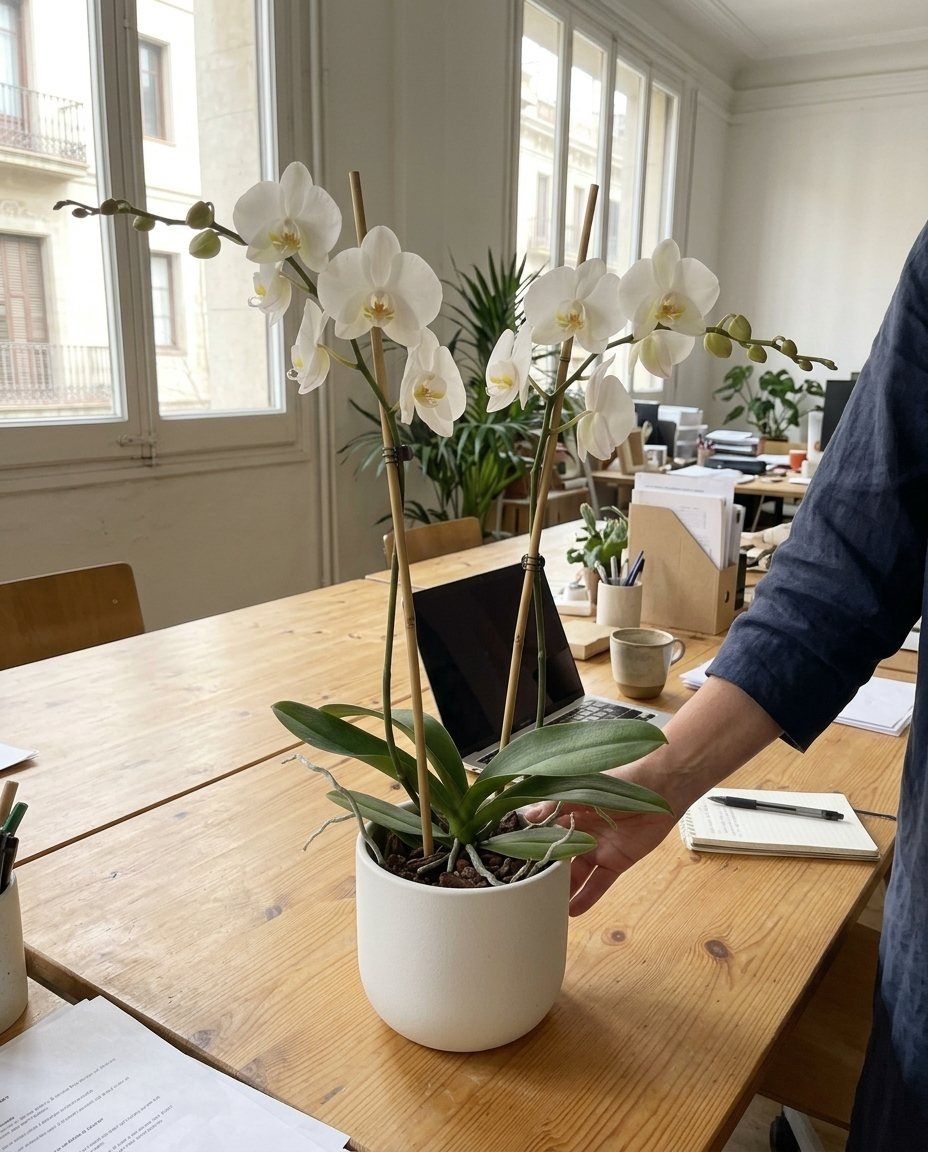
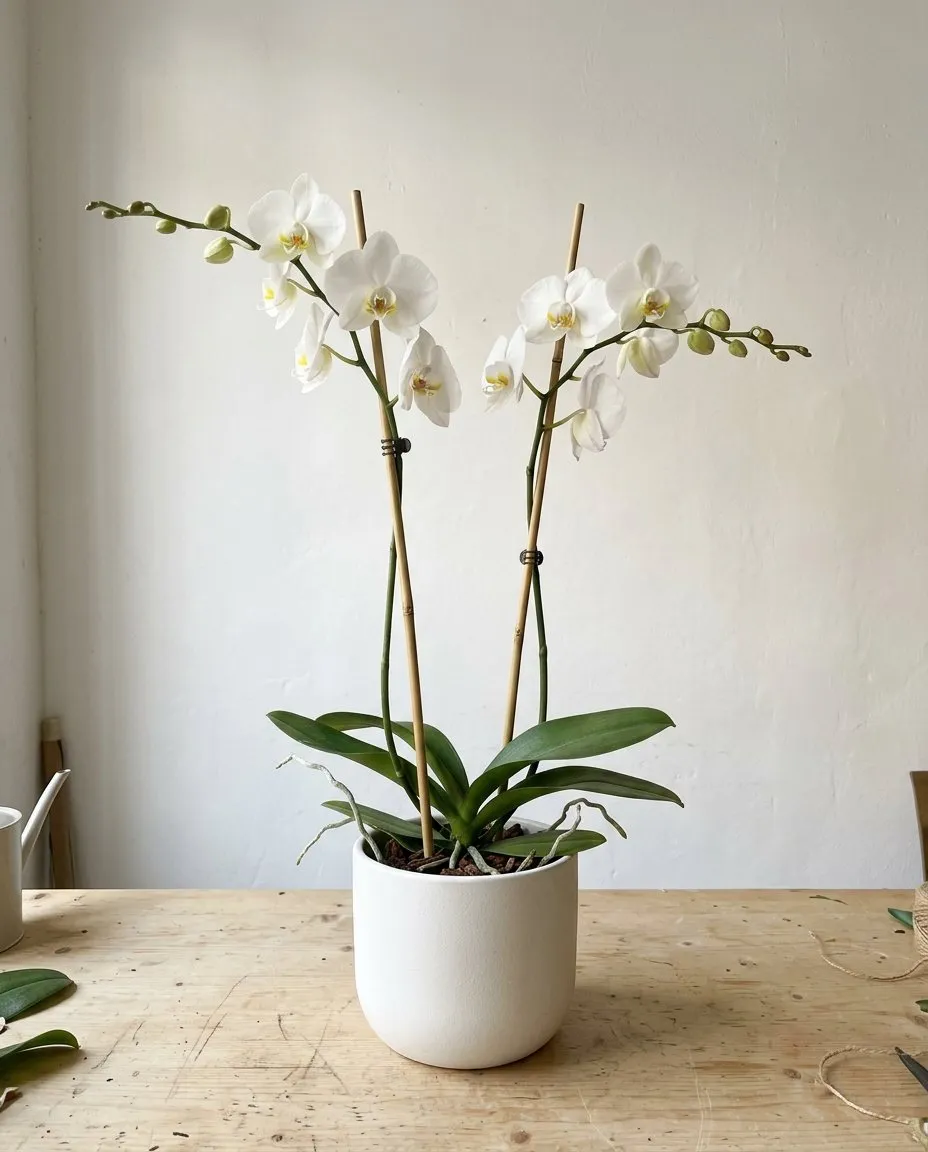
The white orchid is a Phalaenopsis with two flower spikes in a ceramic pot and costs 39 €. Collection from any of our shops is free. Keep this routine beside the plant: check moisture, water when needed, let it drain and provide enough light.
Frequently asked questions
How often should you water a Phalaenopsis orchid?
There is no fixed interval: water when the growing medium is almost dry. Check the weight of the pot and the condition of the roots before adding water.
Why does my orchid have a yellow leaf?
A lower leaf may turn yellow as it ages. If several leaves are affected, or the roots are soft and the growing medium is soaked, check watering and drainage.
Where should you cut the flower spike when the flowers fall off?
If it is dry, cut it near the base without damaging the plant. If it is still green and the orchid is strong, you can cut just above an unused node.
Why is my orchid growing leaves but no flowers?
Check the light and root health first. Too little light can prevent flowering, even while the plant continues to grow.
Should you cut off roots growing out of the pot?
Do not cut firm, healthy aerial roots: they are normal on a Phalaenopsis. Remove only dead or rotten roots when necessary.
Can you keep it beside a radiator in winter?
Find another bright spot: it is best to keep it away from the radiator and draughts, at a stable temperature.